The case was brought on behalf of Revier Technologies, an artificial intelligence company that was denied a “Small Business Credit Initiative” subsidy because its owner, Matthew Schultheis, is white, and Young America’s Foundation, a conservative group that said the interns in its college program were barred from a Department of Homeland Security fellowship that relied on SBA’s “disadvantaged” classification.
[snip]
“The federal government’s pervasive use of race as a proxy for determining who is ‘socially disadvantaged’ — and therefore who receives contracts, grants, loans, investment capital, opportunities, and other benefits — is unconstitutional, and it must be stopped,” the suit says.
The move comes as decades-old affirmative action programs are being ruled unconstitutional one by one. Center for Individual Rights attorney Mike Petrino told The Daily Wire that his suit targets a central regulation that is relied on by at least 20 different government programs. That is the SBA’s 8(a) designation, which takes its name from a 1953 law and is fleshed out in regulations, with no significant updates since 1998.
[snip]
Precedent requires that racial reparations be “narrowly tailored,” but the list of races given preference under SBA regulations is not based on any data about specific groups facing discrimination in specific industries, the suit said.
“As just some examples, Uyghur heritage from Kyrgyzstan is not presumed ‘socially disadvantaged,’ but Han Chinese heritage is. Pakistanis are in; Afghans are out. And because ‘Hispanic American’ includes anyone of Spanish origin, the lineal descendants of the conquistadors are presumed socially disadvantaged.”
Courts have held that race-based programs must also have a “logical end point.” SBA has never removed a minority group from its list and “does not have criteria to evaluate whether a group should be removed from this list because it is no longer suffering the present effects of past discrimination,” the suit said.
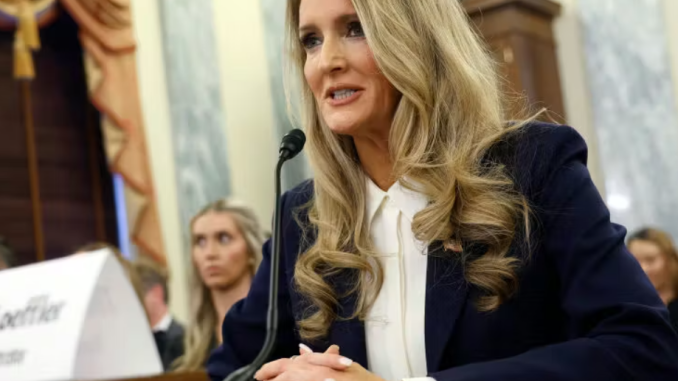
The November 17 lawsuit, filed in federal court in Louisiana, names as defendants SBA Administrator Kelly Loeffler and Attorney General Pam Bondi. It could lead to a court ruling that would end racial giveaways in government — perhaps with a third-party group intervening to defend the practice–or to the Trump administration settling the lawsuit by changing federal rules. SBA spokeswoman Caitlin O’Dea did not return a request for comment.
[snip]
For decades, courts had made clear that directly race-based government programs were constitutional, and SBA claimed it skirted that issue by affording minorities only a “rebuttable presumption” that they were disadvantaged. In other words, minorities would have less paperwork to complete, but a process was still in place to ensure that, for example, the child of a Chinese billionaire wouldn’t be considered to have suffered discrimination in America.
The 2018 case exposed that this was false: A process to rebut the disadvantaged status didn’t even exist.
In July 2023, a judge issued a preliminary injunction forcing the SBA to change the way it chose which companies were “disadvantaged” for purposes of awarding government contracts. But the actual regulation was never changed, and other programs that piggybacked on it are still using it.
[snip]
The Department of Transportation also runs its own minority contracting program. The SBA and Transportation programs together likely make up the most lucrative race-based government programs in history. In 2021, 10% of all surface transportation money, more than $37 billion, was earmarked for “disadvantaged” companies.
But in September 2024, that program was also hit with a preliminary injunction amid claims that the program violates the Constitution’s equal protection clause, though it applied only to the companies that were parties in the case.
In May 2025, the Trump administration told a Kentucky judge it agreed that “the DBE program’s use of race- and sex-based presumptions of social and economic disadvantage … violates the equal protection component of the Due Process Clause.” Solicitor General D. John Sauer, who argues for the federal government before the Supreme Court, said he determined that his department would not defend the law.
In October 2025, the Trump administration’s transportation department enacted an interim final rule that “eliminates presumptive eligibility based on race or sex and requires applicants to submit individualized evidence of social disadvantage.”
[snip]
It is unclear how the government could objectively verify, rank, and evaluate such claims, and whether the essays will merely be a pretext that results in essentially the same outcome: Preference given to minorities who write that they are disadvantaged because of their race. SBA has not responded to questions about the essays.
The set-aside contracting scheme has led to corruption as those who secure an inside track to government contracts often morph into influence-peddlers who rent out that access to “partners” or subcontractors–non-disadvantaged firms who do much of the actual work. The ability of government officers to steer funds directly to specific companies, without competitive bidding, has also facilitated bribery.
Eliminating the existence of the set-aside programs, instead of just how they use race, would require an act of Congress, Petrino said.
[snip]
Last month, Loeffler, the SBA head, said a full review of the 8(a) program was underway, with an eye towards eliminating fraud. “For years, bureaucrats have turned a blind eye to rampant abuse within the contracting program for ‘socially and economically disadvantaged’ small businesses,” she wrote, referencing a Daily Wire story. “That ends now – as SBA works to complete its full-scale audit of the 8(a) Program.”
* Original Article:
https://www.dailywire.com/news/new-lawsuit-could-topple-the-heart-of-race-based-federal-programs